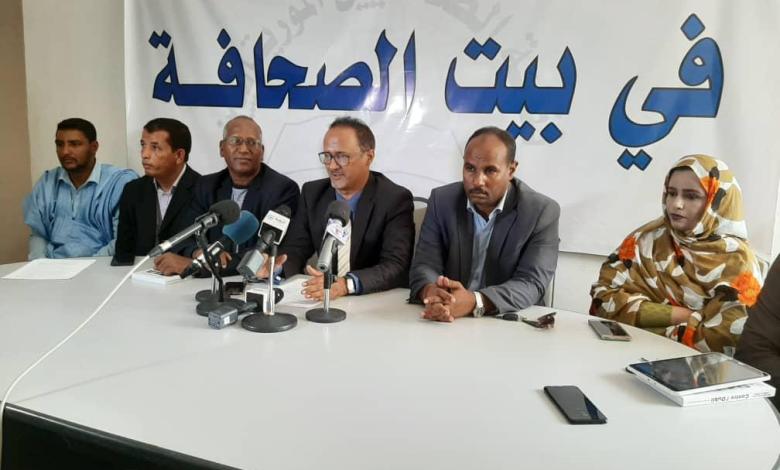
Mauritanian Journalists’ Union President Mohamed Salem Ould Dah said that President Mohamed Ould Cheikh El Ghazouani had promised during their meeting a week earlier to consider their demands and affirmed his readiness to engage with the vision the Union would present.
The Union submitted a petition to the President focused on “the need to fulfil the moral and material rights of fellow journalists working in the public and private sectors”, according to the Union President.
The Union called for a Higher Press Council to regulate, organise and professionalise the press in Mauritania, with journalists represented by their most representative body.
Other demands included issuing a unified press card under legal conditions, “to regulate and professionalise the sector, with moral and material benefits for its holders in accordance with international standards”.
The Union also called for a review of pay for journalists in public media organisations, payment of the 50+ 10% increase, and a requirement for private media organisations to give their journalists contracts.
It also called for applying public media organisations’ statutes “to protect the rights of journalists working in the institution”.
The petition requested enforcement of court rulings in favour of journalist Mamouni Ould El Mokhtar, dismissed years earlier from the Mauritanian News Agency, and the return of cartoonist Boun Ould Def to his job at the same organisation.
The Union called for permanent appointments for contributing staff in public media based on seniority and competence, increasing the public press support fund’s ceiling, revising its founding law, removing the supervision of the High Audiovisual Authority, HAPA, and forming a supervisory committee with journalist representation and relevant technical bodies>
Among other matters, the petition called for an institute for journalistic training and skills development, and land allocations for field journalists and staff working in media organisations.
The Union declared its full readiness to engage with what it described as “the new direction of the country’s highest authorities” in serving journalists’ interests, defending their rights, and cleaning up and developing the press sector.